Blog
Data-driven manufacturing: Using data to improve manufacturing performance
How data is changing the way manufacturers operate and compete
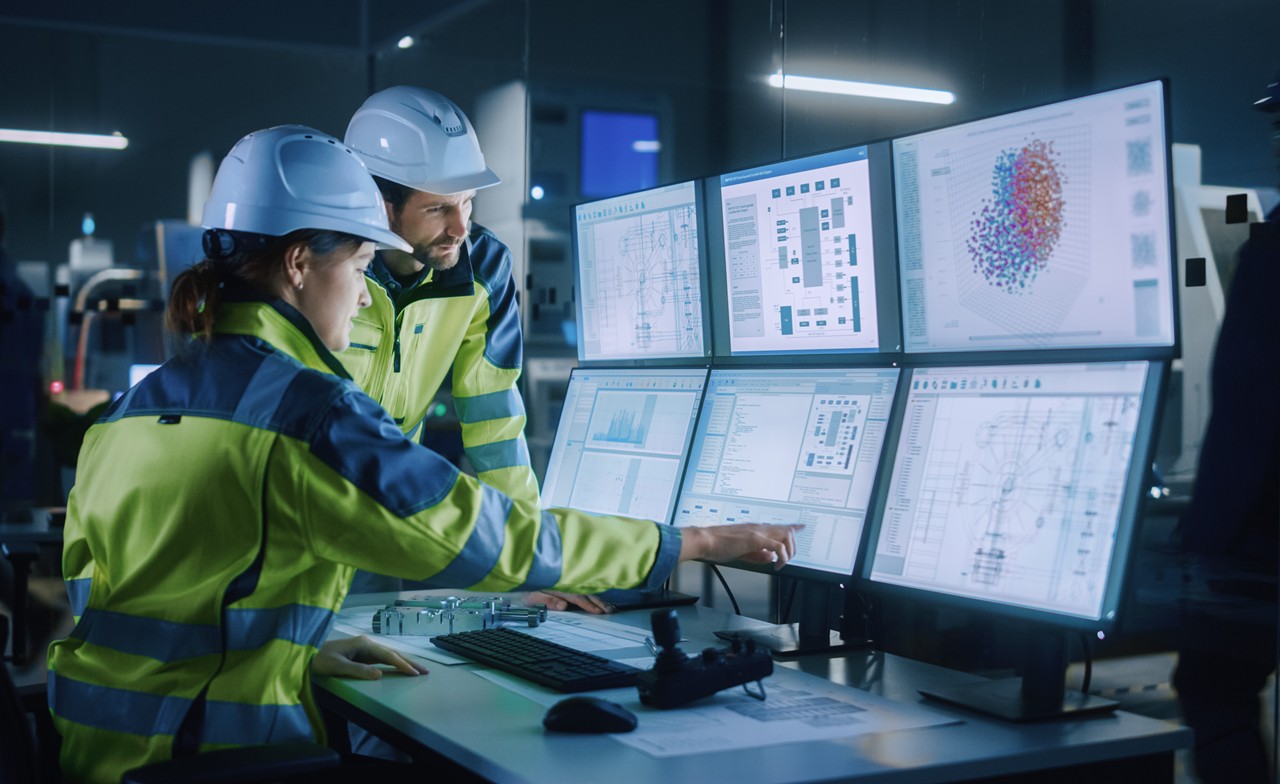
Data is increasing visibility into manufacturing operations, enabling faster decisions and making performance more responsive to changing conditions.
Manufacturing leaders are navigating global volatility, supply chain pressures, sustainability expectations, cyber risk, talent shortages and rapid technological change. These forces are increasing the need for operations that can adapt quickly amid uncertainty.
CGI Voice of Our Clients research shows that 56% of manufacturers report that digitization has a high impact on their business models. Yet manufacturers still face barriers, including legacy systems, organizational silos and gaps between business, IT and OT.
As plants become more connected, manufacturers can combine information from machines and production environments with data from enterprise systems, products, supply chains and ecosystems. This creates opportunities to:
- Improve visibility across operations
- Make faster, better-informed decisions
- Improve production and processes
- Respond more quickly to changing conditions
- Enable analytics, AI and automation
- Support new products, services and business models.
The real advantage lies in turning data into intelligence that improves decisions and operations.
What is data-driven manufacturing?
Data-driven manufacturing (DDM) is the practice of aligning business goals with data strategy and analytics to turn plant, machine and enterprise data into trusted, actionable insight. It combines data strategy, governance and change management so manufacturers can improve decisions and operational performance at scale.
A data-driven manufacturer can:
- Connect relevant data across operations and enterprise systems
- Establish trusted, governed and contextualized information
- Use manufacturing analytics to improve decisions and drive outcomes
- Apply AI and machine learning to the operational problems that matter most
- Scale successful data-driven practices across the enterprise
The goal is to use trusted data to understand current conditions, anticipate what may happen next and make better decisions, even amid uncertainty.
CGI’s Unified Manufacturing approach places this ability to turn data into insight at the heart of intelligent, adaptive manufacturing.
How can manufacturers connect and make better use of data across their operations?
Becoming a data-driven manufacturing organization requires creating a digital continuum from design and distribution through to sales and customer feedback, with business units sharing and receiving information at the right time.
However, manufacturing data is typically scattered across machines, sensors, and systems like manufacturing execution systems (MES), enterprise resource planning (ERP), and product life cycle management (PLM).
The challenge has two parts:
- Connecting these environments and ensuring they are speaking the same language
- Making their data trusted, contextual and useful.
Our 2026 Voice of Our Clients research shows that 54% of manufacturers report having a holistic data strategy, yet only 48% say they can readily locate their data assets. Just 36% consider their IT/OT data convergence mature.
Connecting and making better use of data requires manufacturers to focus on three areas:
- Standardize how data is structured and described. Use consistent data models, language and metadata definitions so terms such as "downtime" or "defect" carry the same meaning across machines, lines and plants, and connected data can be interpreted reliably.
- Add operational context to connected data. Ensure people and systems understand what the data represents, where it comes from, who is responsible for it, which asset or process it relates to, and how current it is. Identical sensor readings can have different significance depending on the asset they relate to, underscoring the need for contextual metadata alongside connectivity.
- Bridge IT and OT. Integrate shop-floor and business systems through edge gateways, IoT platforms, or a unified data layer so production data can inform business decisions in near real time while making business context available on the plant floor.
Turn real-time manufacturing data into better decisions and operational performance
Manufacturers create value from real-time data when they add context, apply AI and analytics and use the resulting insight to improve operational decisions and processes.
When operational data is available with the right context and at the right time, manufacturers can move from looking retrospectively at performance toward understanding current conditions and anticipating what may happen next.
A useful way to think about that progression is:
Data → context → insight → foresight → action → outcome
Analytics and AI help teams spot patterns and relationships that are hard to see in isolated data. Dashboards give visibility across plants and processes; digital twins add physical and operational context.
Together, these support:
- Production and process visibility
- Quality analytics
- Predictive maintenance
- Performance optimization
- Energy and resource analysis
At BRUGG Pipes, for example, CGI helped connect previously inaccessible production and environmental data, add context and analyze it in near real time. That let teams see the relationships between production conditions, product quality and energy consumption, and use them to make faster decisions.
Visibility creates value when teams use the insight to change a decision or process.
Use data to enable AI and advanced analytics in manufacturing
Connected, trusted manufacturing data enables AI by giving analytical models the quality, context and operational relevance needed to produce useful outcomes.
Trusted, contextualized data does more than enable individual AI use cases. It creates the foundation for manufacturers to industrialize AI, embedding intelligence into operational workflows and scaling successful capabilities across plants, functions and ecosystems.
CGI Voice of Our Clients research shows that 66% of manufacturers are already applying AI across core business and operational processes. However, 49% still aren't quantifying the results of their AI implementations, reinforcing the importance of connecting data across AI initiatives to measure and demonstrate tangible outcomes.
A practical approach is to start with the operational problem and work backward:
- Identify the outcome that needs to improve.
- Define the decision or process that needs to change.
- Determine what data is required.
- Assess whether that data is accessible, trusted and contextualized.
- Apply the appropriate analytical or AI capability.
- Measure outcomes.
At Uddeholm, CGI applied big data, IoT, advanced analytics and machine learning to steel-production data. The model predicted where and when cracks could occur with more than 70% accuracy, helping the manufacturer identify causes of quality issues and adjust its processes to reduce damaged steel and waste.
How can manufacturers scale data-driven operations across plants, systems and teams?
Individual use cases can demonstrate value. But becoming a data-driven manufacturer requires the ability to repeat and extend successful data-driven initiatives across the enterprise.
Four steps to scaling data-driven operations:
- Align data strategy to business value
Define a shared data vision and prioritize initiatives around measurable manufacturing outcomes. - Manage data as a strategic asset
Establish the governance, quality and standards required to make data trusted and reusable. - Raise enterprise intelligence
Apply analytics and insight to high-value use cases and extend successful approaches across functions and operations. - Ensure organizational readiness
Develop the skills, leadership, ownership and change capabilities required to embed data-driven ways of working.
Setra Group, for example, moved from fragmented legacy MES solutions toward a common platform integrated with ERP. A shared data warehouse enables KPI comparisons across production sites and enterprise-level performance reporting, creating a more standardized digital foundation.
The aim is to move beyond isolated projects toward reusable capabilities that allow plants, systems and teams to learn from and build on successful data-driven initiatives.
Benefits of transforming into a data-driven manufacturing enterprise
- Build highly productive teams that work from the most insightful and supportive data in real time, enabling true innovation and cross-pollination.
- Move beyond just optimizing operations to anticipating change and responding proactively with strong business and IT alignment.
- Use data across the enterprise to identify opportunities for new services, products and business models.
- Collaborate with external partner ecosystems to share data, improve coordination and identify new opportunities.
- Reflect, learn and continuously improve to realize the organization’s vision and demonstrate measurable results.
- Use trusted data and responsible, transparent practices and processes while adopting enabling technologies that unearth the relevant data required to take measurable action and demonstrate sustainability progress.
- Attract and retain talent by giving people opportunities to work with data, technology and new ways of solving manufacturing challenges.
Client impact: Turning manufacturing data into operational value
Across manufacturing, connected data, analytics and AI are being applied to real operational challenges.

From document fragmentation to a data foundation
Faced with a large volume of unstructured contracts, Airbus partnered ...
BRUGG Pipes: Validating a digital strategy with…
BRUGG Pipes, Switzerland’s largest pipe manufacturer, set out to accelerate ...

Uddeholm: Using machine learning to predict…
To help Uddeholm, a leading steel producer, we developed a ...

Setra Group: Driving standardization at scale…
To strengthen its digital foundation, Setra turned to CGI—a trusted ...
How CGI helps manufacturers become data-driven
Data-driven manufacturing is a core capability within CGI’s Unified Manufacturing approach, helping manufacturers connect data, generate insight and turn intelligence into action.
We help manufacturers:
- Build holistic data strategies aligned to business priorities and measurable outcomes.
- Establish modern data governance to improve quality, traceability, compliance and trust.
- Unify data across the value chain, from product design and production through customer delivery.
- Apply manufacturing analytics to improve visibility and decision-making.
- Deploy digital twins and intelligent dashboards for contextual and predictive insight.
- Apply AI, advanced analytics and machine learning to turn operational data into foresight.
- Assess data maturity and organizational readiness to support scalable, continuous improvement.
These capabilities help connect data with the wider manufacturing environment, including MES, ERP, PLM, IIoT, edge technologies and IT/OT integration.
From our strategic collaboration with Volkswagen Group to reimagine managed services to being recognized by our alliances partners, such as the Brickbuilder Specialization by Databricks, CGI is recognized by our clients for our ability to support their manufacturing transformation.
Related offerings

Data-Driven Manufacturing
As manufacturing environments become more complex, forward-looking manufacturers see extraordinary ...

Unified Manufacturing
Unified Manufacturing is our vision of how technology and innovation ...

Data analytics
CGI brings deep expertise to help clients navigate and manage ...

Artificial intelligence
CGI is a trusted AI expert, helping clients demystify and ...
Manufacturing execution systems (MES)
Manufacturers are looking to enhance end-to-end supply chain visibility and ...
Build a data-driven manufacturing foundation
Manufacturers do not create value from data simply by collecting more of it. Value comes from making information trusted, contextual and available to the people, processes and technologies that can use it to improve outcomes.
By aligning data strategy to business value, managing data as a strategic asset, raising enterprise intelligence and preparing people for new ways of working, manufacturers can move from fragmented information to repeatable data-driven capabilities.
As manufacturing becomes more unified, this foundation helps manufacturers sense what is happening, make better-informed decisions and act with greater speed and confidence.
More expert perspectives
Blog
From insight to impact: Scaling augmented industrial data for real…
See more
Blog
4 steps to become a data-driven manufacturer
See more
Blog
Top 2 strategies to secure investment for AI-powered asset…
See more
Article
Revolutionizing manufacturing with AI and machine learning
See more
Blog
AI and diversification: A dual strategy powering manufacturers’…
See more
Video