
Sonja Pietilä leads the application of artificial intelligence across CGI’s health and social care accounts. She heads CGI’s innovation team, working closely with clients to turn emerging digital capabilities into practical, scalable solutions.
A brain hemorrhage, or brain bleed, is a life-threatening stroke that requires quick treatment for the best outcome. Almost 69 million healthy life years are lost each year due to brain bleed-related death and disability. Currently, the biggest diagnosing challenges are the demanding interpretation of images and lack of radiology resources, particularly in hectic emergency care settings.
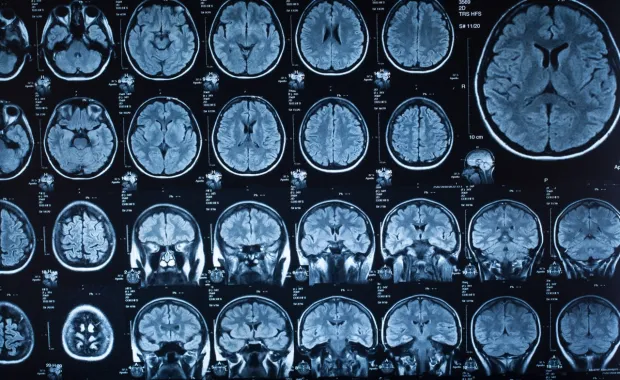
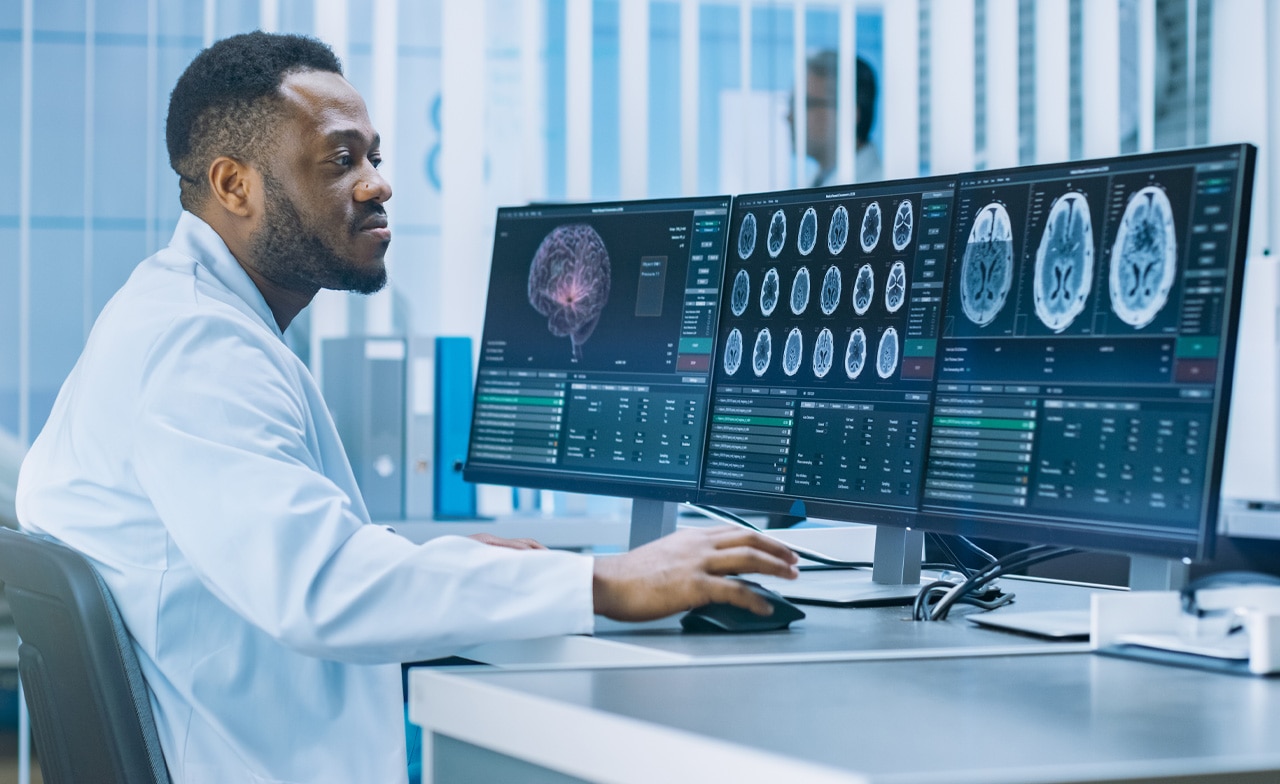
HUS Helsinki University Hospital, CGI and Planmeca have jointly developed an artificial intelligence solution (CGI AI Head Analysis) that assists radiologists and clinical doctors in interpreting brain CT scans and detecting the most common types of non-traumatic brain hemorrhages.
“Each year, millions of people across the globe are diagnosed with some type of brain hemorrhage—an acute condition that requires a prompt and accurate diagnosis,” said Miikka Korja, Innovation Director and Associate Professor of Neurosurgery at Helsinki University Hospital. “This number is increasing year by year, while the number of radiologists is decreasing. Further, interpreting head CT scans requires time and experience, but most emergency clinics are very busy.”
How it works
CGI AI Head Analysis uses AI to analyze CT head scans as part of real-time emergency treatment to support the diagnosis of the most common types of cerebral hemorrhages, which cover 99% of acute cerebral hemorrhages.
A radiologist uses AI to first analyze the images independently. Then, AI outputs provide expert advice to support a diagnosis. After a diagnosis is made, the radiologist can compare the assessment with the AI results.
The solution analyzes data from various hospital imaging devices to build and clinically test algorithms in line with rigorous regulatory requirements. Several hospitals have conducted independent solution testing and validation, including one of Switzerland's largest university hospitals. Furthermore, world-leading medical journals Neurology and Nature published articles on these AI-based diagnostics.
To play this video, enable Statistics cookies. Google/YouTube may process your data – Learn more.
AI aids in detecting specific brain bleeds with up to 98% accuracy
We have worked with CGI to develop a completely new AI-based solution, consisting of several AI algorithms working in parallel, to help identify the most common types of non-traumatic brain hemorrhage quickly and accurately.
Innovation Director and Associate Professor of Neurosurgery at Helsinki University Hospital
Realizing groundbreaking outcomes
This globally groundbreaking AI solution identifies the most common non-trauma-induced brain bleeds to assist on-call physicians in interpreting CT images of the head. The solution’s AI algorithms:
- Detect anomalies and identify in real time CT scans that call for urgent attention
- Identify the most common types of brain bleeds, covering 99% of acute brain bleeds
- Identify a specific brain bleed with 98% accuracy

Applying responsible use of AI by ensuring ‘humans in the loop’
Key to this project has been a responsible use of AI framework that ensures privacy and security risks are addressed for the data, the environment, and any data movement—from diagnostic imaging to analysis.
Academic rigor and best practices helped to ensure the model and its outputs were accurate, that the solution was scalable, and that experts were engaged at every stage—from design to output interpretation—so the solution could be operationalized in clinical workflows.
*CGI AI Head is not currently a CE-marked medical device and is not yet commercially available.