Rather than viewing supply chains as industry-specific, the discussion reframes them around what people rely on every day.
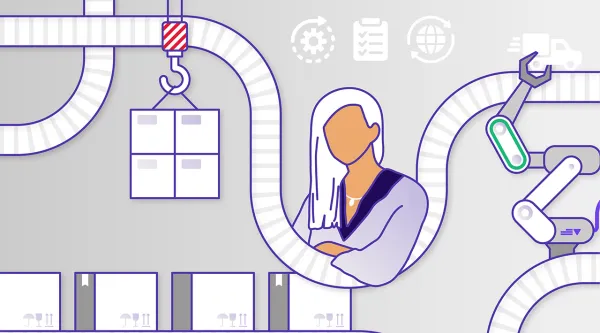
The citizen supply chain spans all industries that support daily life, including healthcare, government services, manufacturing, retail, energy, banking and telecommunications. It is an interconnected system that must operate seamlessly to meet citizens’ needs.
Within this system, energy, banking and telecommunications form a critical backbone, enabling everything from powering homes to accessing services and completing transactions. This is what CGI describes as the citizen supply chain: a system that must function end-to-end without interruption.
This discussion focuses specifically on the role of energy and banking within that wider ecosystem.
Loss of power halts physical activity, but the inability to access money or complete transactions can be just as disruptive. These systems fail together and must recover together. Restoring one without the other leaves the system only partially functional.
Resilience now depends on how well these systems recover in sync, not how they perform in isolation.
Utilities rely on financial systems for billing, supplier payments and operations, while banking depends on energy and connectivity to function.
Disruption in one system immediately constrains the other. As transactions become fully digital, energy systems are increasingly tied to real-time financial flows and identity verification.
Energy is shifting from supply to performance.
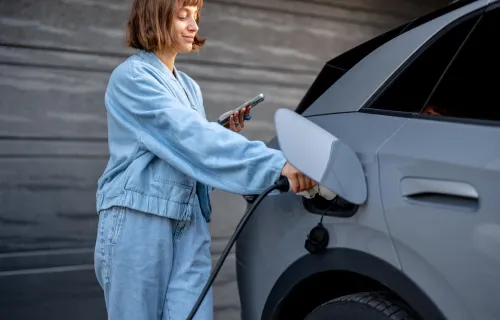
Advances in electrification, storage and distributed energy are enabling models in which customers care less about units consumed and more about reliability and performance.
Technologies such as virtual power plants, distributed energy resource management and vehicle-to-grid capabilities allow providers to coordinate grid supply, distributed generation and storage in real time.
This shifts energy providers from infrastructure operators to systems orchestrators, responsible for delivering outcomes rather than simply supplying power.
As systems become more interconnected, speed becomes critical.
Banking is moving toward real-time, embedded and automated services, where payments, identity and decisioning happen continuously in the background. In parallel, energy systems are dynamically balancing distributed supply and demand across increasingly complex grids.
The ability to respond in moments, not hours, determines whether disruption is contained or cascades across systems.
Despite clear interdependence, operational coordination remains limited. In disaster scenarios, utilities restore power while banks deploy mobile ATMs—both essential, yet rarely aligned despite serving the same communities.
The next phase isn’t building new systems; it’s coordinating the ones we have. That means aligning response efforts, sharing real-time data and managing risk across industries instead of operating in silos.
This model already exists between energy and telecom and can extend to banking and insurance to accelerate recovery and better outcomes.
Resilience is no longer confined to individual industries. It now depends on interconnected systems built through data exchange, coordinated response and shared responsibility.
For energy and utilities leaders, this means operating beyond traditional boundaries to forge cross-industry partnerships.
This isn’t a distant vision. It’s an emerging operating model already evident in how essential services are evolving today.
- 1. Introduction: Industry leadership and supply chain innovation
-
Charley Wark
Hello, everyone out there. My name is Charley Wark, and I am head of the global commercial industries at CGI. This is the part two of a two-part podcast that I'm recording with my global industry leader and head of banking, Andy Schmidt. Hi, Andy.
Andy Schmidt
Hey Charley.
Charley Wark
And our global industry leading head of energy and utility, Peter Warren. Hi, Peter.
Peter Warren
Hey, Charley, good to see you again.
- 2. Defining the “Citizen supply chain” and its importance
-
Charley Wark
Thank you for joining the second part. In the last episode, in the first episode (go back and listen to that if you haven't already), we talked about what all industries can learn from Formula One in terms of staying to the edge of what's regulatory allowed when you're developing your competitive edge. And we ended by talking about how the industries can cooperate and collaborate to strengthen the supply chain that are feeding our societies where we live today.
Before we kick off in this episode, I would like to explain briefly what we at CGI call the “citizen supply chain.” If you are in normal circumstances, when you talk about a supply chain, you think about one company, what you need from the beginning of developing a product to making it, manufacturing it, and then later sell it and deliver it out to an end customer.
But at CGI, when we were working on mapping the supply chain for all industries that we are serving, we started thinking about: “What if we instead put the citizen in the center of the supply chain and map out what we need in order to uphold the everyday life and comfort of a citizen in the societies where we live?”. And we call this the citizen supply chain.
Very quickly, you will realize that it's not just one industry supply chain, one company supply chain, or even a government supply chain. You need a web of supply chains, a supply chain ecosystem, to uphold the everyday comforts that we have. Banking and energy & utilities are definitely staples in this citizen supply chain.
- 3. Energy infrastructure resilience and daily life dependence
-
Charley Wark
With that said, I would like for us to talk in this world, when we have geopolitical uncertainties, and I will turn to you first, Peter. How critical do you think it is to control your own digital and physical supply chain in today's day and age to be able to feel safe and secure?
Peter Warren
It's a great question, Charlie. Thank you. I mentioned it in the first part of this, is that you wake up in the morning, and you expect your lights to work. You wake up in the morning, and you expect your car's gasoline to function and that you can refill it. Anytime there's a disruption to that, whether it's geopolitical or otherwise caused, you feel very personal. It disrupts your entire day. Even being able to go to work and do whatever it is that you do Monday to Friday can't happen because these things are not going on the way they should or they make it much more difficult.
Think of the disruption that COVID caused. Looking back to that period when we had a global disruption, people looked to these core services to continue to function, yet they were under the same constraints and difficulties as everyone else. There was a real push at that time to have a look at it, and this has continued and only accelerated now with the world of AI, to optimize and improve those processes, to not accept the status quo, to enable employees to work digitally and more remotely. Younger employees demand that tools are on the iPhone or whatever tablet they're going to be using.
These shifts have only continued to accelerate that for the normal part of our day to work, new tools, new services, new functions, high bandwidth internet, all these things have to happen at once for us to be able to go to bed at night and not have another headache, including my fact that I expect my bank to be there, I expect it to be working the way I expect it, I expect my money to be there, I expect the stock market to run. In the guise of national security and the things moving forward as countries move forward, energy flexibility, and I'll touch base on that a bit further, but being able to do things in new innovative ways is no longer just one part of the supply chain or the ecosystem. It's really affecting all of it. And banks are a key element of that as well.
- 4. Banking as critical infrastructure in the digital economy
-
Charley Wark
Anything that would stop us more drastically than being out of energy, power when you wake up in the morning would be to try to get on the bus and not be able to pay for the bus ride or go to try and buy milk and not have your card function and so forth. It's probably the second most critical industry to uphold the citizen supply chain, would you say, Andy?
Andy Schmidt
Absolutely. Because we've largely moved away from cash and barter hasn't been a thing for some time, we're focusing on digital money. Whether it's your mobile wallet, whether it's your credit card, whether it's a transaction that you initiate online, having the confidence, having the trust in your financial institution that A, the funds are there if they're supposed to be there, and that they're going to get from you to where they need to be safely, securely, and quickly is what keeps our industries running. Energy and utility knowing that the funds are there to pay for their suppliers, pay their employees, for their customers to make their payments on a monthly basis for that energy delivery. Those are all things that banking is helping ensure by taking more of a trusted infrastructure approach to the services that we provide.
- 5. Future of energy: smart grids, electrification, and comfort-as-a-service
-
Charley Wark
One of the pleasures of my job at CGI is that I get to listen to all the ongoing challenges that we have in all of the industries that we cover. But we also have something super fun that we do once a year. It's called Voice of Our Clients when we go out and interview our clients about what their concerns are currently, what's going on right now, what's their priorities for the next year, etc.
As an added bonus to this, I also have you guys to predict what's going to happen in the future. We're talking right now and three years from now, and that type of horizon. But then we also ask you guys to stretch your imagination and go a little bonkers and say what's going to happen in 10 years in the future of banking, in the future of energy and utility. I thought that I would take the opportunity to tease our audience a little by letting you guys share some of this industry foresights that you have been working on.
Peter, when I listen to you describe what's going to happen in about 10 years from now, type of time frame, and you stretch even further in your foresight because you never followed the rules that we put on you. What if you would describe what you believe, what will it be like, let's say 20 years from now then, or 30 years from now?
Peter Warren
It happens to be our 50th anniversary at CGI for those that are following us. We looked at the past where things have come, but for us it's all about driving the future and where things are going to go. We see these trends happening in pockets. Everything I'm about to say isn't something out of my brain. It's happening in real time in various parts. It just hasn't become at scale.
The reality is, and we talked a little about this before, that new technology always consumes old. The drive towards electrification, I think, will continue to happen. We see it happening with all sorts of folks. Yes, EV sales have backed off a little in some places, but in other places they've risen up. Part of that was geopolitical, part of that's been a lot of different components.
The price of lithium has dropped dramatically, but at the same time, solid-state batteries and sodium batteries are coming on and being more reliable. There's a company in the UK selling home-based sodium batteries. Things are changing. New technology is moving forward.
If you jump ahead—I won't specify a time—the concept of moving energy across the planet will change. If we get to the point where we have superconductor technology like the stuff that's already being installed in China between cities, you're going to be able to balance electrical grids a lot differently. Solar electricity at night will be practical because you'll be able to get it from a sunnier part of the planet. Your battery technology will be there and so on. Things are going to move forward.
The concept of buying energy may change as well. From the concept of buying electrons or units of gas or whatever it is that you're going to get to buying the outcome. I want comfort. I will pay you for comfort. In the banking industry I'm going to pay you for resilience and security and being reliable with my stuff, in the energy industry, perhaps I pay you to be comfortable.
We see that already happening with certain companies that have a history of both energy and also manufacturing buildings designing neighborhoods with people. Now they're not selling it that way, but if you think about it, I don't want to own units of electricity. I want a backed up resilient system. If that includes solar on my roof and a battery, maybe in a community that I share, that's what I want. I don't really care how you do that, I just want that. Just charge me that.
We're starting to get that as we talk about DERMS or distributed energy resource management in my industry. We talk about that when we talk about vehicle to grid technologies and so on and virtual power plants. People in my industry will know what those are. We're getting there. It just hasn't hit the tipping point, but it will get there.
- 6. The Future of banking: AI, digital identity, and embedded finance
-
Charley Wark
Very interesting. Andy, will there be banks in 10, 20 years from now?
Andy Schmidt
Of course there will. There will be banks 10, 20 years from now. They're just going to look different than the way they look today. There will still be plenty of branches and there will still be plenty of touch points. But where the banks are really going to be focusing is reinventing the concept of trust and reinventing the concept of identity. We're going to be moving beyond applications and accounts towards more autonomous financial ecosystems.
The goal is going to be a mix of AI, digital currency, even decentralized infrastructure to run things in real time and to be able to help businesses make decisions in real time about resource and liquidity management optimization and to help you focus on the running of the business, not the running of the numbers behind the business.
Along with that, embedded finance is going to be a key part of it running silently beneath healthcare, real estate, global commerce, and it's going to be increasingly mobile. We've seen that even last year in CGI’s Voice of Our Clients, where the younger generations are demanding that services be mobile first, indeed even mobile only. We're developing solutions to enable that, to enable you to authenticate over a mobile device, to confirm that it's you so that you can make that signature, execute that document and keep your financial future moving forward.
At the same time, as we're looking to get core to truly real time, that level of data and that level of data sovereignty is what's going to be important as we focus on being confident on where our funds are, where our information is, and that we'll be able to manage those services, leverage those services, even if there is an outage.
When you look at identity as a service, banking as a service, payments as a service, and being able to manage outages, and look, many outages are just facts of technology or facts of nature. Something happens, and you need to be able to react to it. But getting those services back up and running in moments instead of hours or days is what's going to keep that trust, going to maintain that resilience, that confidence in the markets, and make it so that the financial services is just a seamless part of your life, ever present, ever enabling, ever coordinating, but seamless and almost invisible in terms of the manners in which you have to interact with it.
- 7. Disaster response and cross-industry collaboration
-
Peter Warren
I totally see this—we've talked about this, Andy and I—about the fact that when a natural disaster happens, a hurricane, a tornado, whatever. One of the things that people have, and you, Charley, talked about this, is access to money, access to cash, access to systems. If everything's down, the banks deploy ATMs out there and put them into the fields. We have work crews going out there and doing things, repairing power lines, helping with the gas network, whatever happens to be disrupted.
There's an opportunity here, going back to the citizen side of this, is looking beyond ourselves, cooperating. Perhaps the banks reach out to the utilities and say, hey, if you're rolling somebody out there, take one of the ATMs you have and deploy it, or can you get power to me here and cooperate?
We see this as something that goes on between the telecom industry because how do you bring up today's electricity without the telecom working, and how do you bring up today's telecom without the electricity working? But there's an opportunity in other industries moving forward here.
And although we are talking just banking, the insurance industry being an active part of this, mitigating risk, understanding how to move forward instead of something that we look at once a year, either our financial things or our insurance things, actively having the banking industry and the insurance industry being part of the energy industry, talking about risk, mitigation, covering me where I'm exposed, and maybe lowering my costs someplace where I don't have the same risk. Something I see moving forward in the future.
- 8. Final takeaways: Building a resilient citizen supply chain
-
Charley Wark
Peter, that was a really good place to end this podcast. And seeing that cooperation, collaboration, building resilient citizen supply chain is something not just part of the future, but it's happening already here and now. By that, I would like to thank Andy and Peter for being a part of this podcast, and we will hear you soon again, somewhere out there.
Peter Warren
Thanks, Charley. Thanks, Andy. Thanks all.
Charley Wark
Thank you.