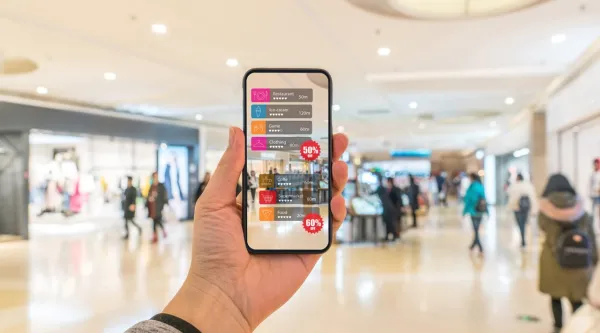
The shopping experience continues to evolve to simplify the customer journey and make it easier and faster to find, buy and receive what consumers want. The number of combinations: buying online, in store or at a marketplace, paying now or later, picking up in store or having an item delivered, and returning purchases, adds complexity to the customer journey and requires strong digital solutions.
Omnichannel retail expands customer choice and operational complexity
Retailers’ focus has been on enabling these options, including to buy online and pick up in store (BOPIS) and to buy online and return in store (BORIS). This has created significant supply chain challenges, particularly in managing returns. Different retail sectors have different characteristics and challenges, and fashion retailers, in particular, have struggled with high volumes of costly returns.
E-commerce platforms have been upgraded to improve search and discovery, enrich product information and provide a quick and secure checkout and flexible delivery. Product information management (PIM) and digital asset management (DAM) solutions support these capabilities. On top of this, sales has moved into new channels, including marketplaces and social media platforms.
With digital commerce, data quality is critical. With demanding customers, transparent prices and thin margins, efficiency, speed and waste reduction are central priorities for retailers. Average selling prices, markdowns, profit margins, campaign economics and contribution margins all depend on accurate data from every sales point. Even more important is inventory accuracy and knowing the inventory level at each stocking point and in transit, for every SKU, including sizes and colors. Unfortunately, it’s all too common for consumers to find a product online listed as available at a store, only to arrive and discover that it isn’t there.
How AI is changing product discovery in retail.
For retailers looking to deliver a friction-free unified customer experience, trusted data has been critical for many years. In the new era of AI, it will be even more important. AI is now making inroads in the shopping experience for product recommendations, personalization, order orchestration and optimization of the entire supply chain. AI can improve efficiency and the customer experience.
One of the latest developments in the shopping experience is agentic search, which has the potential to fundamentally change how customers discover products. Instead of entering keywords into a search engine like Google, customers can use a prompt to describe what they are looking for, how and when they plan to use it, how much they are willing to pay, and relevant preferences.
Yet results from these searches are still disappointing. (Read my blog, Five insights guiding retail decisions in 2026.) Many retailers lack the contextual product descriptions AI agents need to surface their products. Some retailers don’t make their product data accessible to agents; others restrict agent access to their sites. The changes needed to make products searchable by agents may be small: add context, enrich descriptions and ensure the data is accessible. These are practical steps toward agentic search.
In a few years we may be accustomed to using context-driven agentic search to quickly find products that fit our needs and budgets in a specific situation. A simple prompt could help us compare and select products; eventually, a personal shopping agent might do this using what it knows about consumers’ preferences.
Trust data will shape the future of agentic search
In this world of automated search and discovery, trust will be key. Making trusted data accessible will help AI deliver value.
If you’re attending NRF 2027, I’d be glad to continue the conversation there. Let’s talk about how you can prepare for agentic search and make it easier for your customers to find the products they need.
Back to topAbout this author

Christian Haeger
Vice-President, Global Industry Lead, Retail, Consumer & Services
As the Global Industry Lead, Christian is responsible for the development and execution of market strategy and business development for the retail, consumer and services industry.