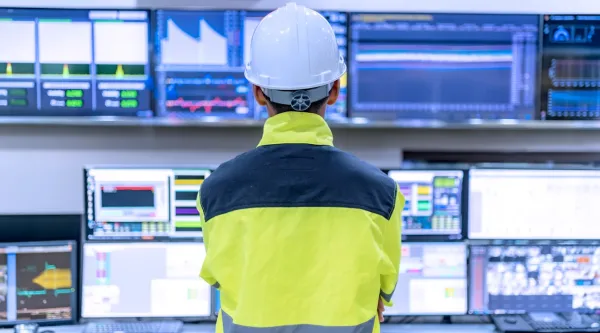
Rapid advancements in artificial intelligence (AI) are forcing businesses in the manufacturing industry to restructure and redefine their operations to remain as efficient, innovative and productive as their competitors. With proper integration, AI machinery and programs offer endless potential. Let’s take a look at the benefits and challenges of combining AI and manufacturing.
AI and manufacturing operations
Those in the industry understand how AI revolutionizes various manufacturing processes. Different AI technologies can be used to enhance data analysis and decision-making. When AI machinery is used correctly, a manufacturing business can reshape operations to fit in with a smarter future, improving quality control, streamlining supply chains and optimizing production.
What are the benefits of AI in manufacturing?
With AI machinery advancements, it’s important to note the full range of AI’s benefits to manufacturing. According to the National Association of Manufacturers, in 2025, over 51% of manufacturers in the U.S. have reported using AI at some level of production. If you think it’s time to create a plan for AI integration within your organization, look at this comprehensive list of benefits:
Key benefits of using AI in manufacturing:
- Increased operations and maintenance: AI technology can analyze equipment functions, regularly scheduling maintenance and repairs to avoid potential breakdowns
- Superior quality control: AI machinery is able to sense highly accurate, real-time defects, resulting in consistent quality and less waste
- Enhanced productivity: AI machinery automates repetitive tasks typically done by humans, reducing potential for error, optimizing workflows and minimizing downtime
- Reduced costs: AI machinery lowers operation costs by optimizing energy, materials and labor, leading to increased financial outcomes
- Supply chain management: AI technology provides real-time insights to inventory levels and supply chains, enabling managers to keep up with demand without over- or understocking
- Mass customization: AI leads to more flexible production, allowing products to be tailored to individual clients without decreasing output time
- Sustainability: AI can be trained to meet certain environmental goals, optimizing energy use and reallocating resources at different steps of the manufacturing process
How is AI-powered predictive maintenance used in manufacturing?
AI-powered predictive maintenance uses historical logs, operational records and sensor data to detect early warning signs of equipment failure. In the past, a breakdown in machinery would disrupt operations until the company could get it back up and running. Predictive maintenance offers a proactive strategy, slashing unplanned downtime, optimizing maintenance efforts and prolonging the lifespan of critical assets.
5 benefits of predictive maintenance:
- Reduces costs
- Limits disruptions
- Increases production output
- Improves safety
- Extends equipment life
How does quality control improve with AI in manufacturing?
Quality control is a crucial aspect of manufacturing. Between ensuring products meet the exacting standards of the industry, satisfying customers and enhancing brand reputation, proving your company can create repeatable and consistent outcomes often means the difference between financial success and failure. By automating the process with AI machinery, your team can save time and produce more consistent results.
Examples of AI quality control improving different sectors of manufacturing:
- Electronics: AI machinery is trained to inspect printed circuit boards for faulty joints and missing parts
- Automotive: AI technology scans vehicle parts for imperfections undetectable to the human eye to ensure structural integrity
- Processing lines: AI technology monitors food and beverage production lines for incorrect packaging to maintain safety and protect against contamination
- Textiles: AI machinery examines fabric patterns and weaves for nearly invisible flaws
- Medical: AI technology ensures complex devices used in hospitals and at-home monitoring meet regulatory standards vital for patient safety
What is the role of AI in supply chain logistics?
Since they are largely responsible for providing our country access to food, medicine and energy, supply chains are often considered the backbone of the modern economy. AI machinery is the key to optimizing supply chain processes for maximum efficiency, saving money and time for both the company and its clients.
To keep supply chain logistics within your organization thriving, focus on leveraging and training AI machinery to create a self-improving autonomous system that’s able to anticipate disruptions and adapt to changes faster than outdated methods. As you implement the technology, you’ll find many uses for it, from route optimization to forecasting potential demand to risk management and more.
Is AI replacing the human workforce in the manufacturing industry?
No, artificial intelligence in manufacturing is not replacing the human workforce. Instead, modern AI is being applied in practical and transformative ways throughout the manufacturing process, from the earliest stages of product design to post-production. None of the successful outcomes would be possible without human oversight.
When it comes to AI and manufacturing, the goal is to change the nature of the work rather than eliminate jobs. Examples of AI augmenting human capabilities in the manufacturing industry range from freeing employees from monotonous tasks to the introduction of AI-powered collaborative robots, or cobots, trained to assist with dangerous tasks and heavy lifting.
What human jobs are needed to ensure the success of artificial intelligence and manufacturing?
Introducing artificial intelligence into manufacturing can create more jobs. Technology-focused and trained employees are the key to seeing success with AI machinery. Data annotators, AI trainers, cybersecurity specialists, machine learning engineers and system integrators are just some of the diverse career opportunities created by the introduction of AI.
Handling the challenges that come with AI and manufacturing
Any sort of change comes with its challenges—artificial intelligence and manufacturing are no different. Building a strategic approach to your implementation plan and encouraging transparency through every step will help you and your team through any growing pains that may arise.
Main challenges in AI and manufacturing:
- Poor data quality
- Cybersecurity risks
- Integration with outdated infrastructure
- Skills gap in the workforce
- High initial investments
- Navigating compliance and regulations
CGI’s history with AI and manufacturing
The expert consultants at CGI are skilled in harnessing AI for manufacturing. From quality control to predictive maintenance to product design and everything in between, our consultants are trained to use solutions like CGI PulseAI and AI LaunchPad to accelerate tangible outcomes for success. Contact us today to learn more.