Transportation is entering one of its most consequential periods of change in decades. Across aviation, rail, highways and transit, three major shifts keep surfacing as the ones that will define the next several years. Understanding them—and the challenges they bring—is the difference between modernization that sticks and modernization that stalls.
Three shifts reshaping transportation
- 1. Physical AI moving from pilot programs into daily operations
-
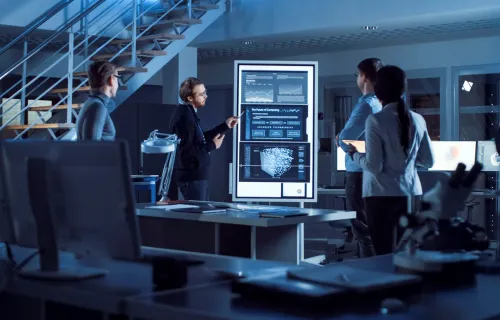
Systems that sense, interpret and act on the physical world in real time, much like a pilot, engineer or highway operator, are moving beyond proof of concept. Examples include computer vision systems that scan rail lines for track defects before a train passes over them, AI models that flag early signs of runway lighting or radar degradation, and machine vision at ports that automatically inspect cargo and containers at a scale no manual crew could match. Expect AI to take on an increasing share of predictive maintenance, automated planning and real-time decision support across every mode.
- 2. Full use of available capacity, not just established corridors
-
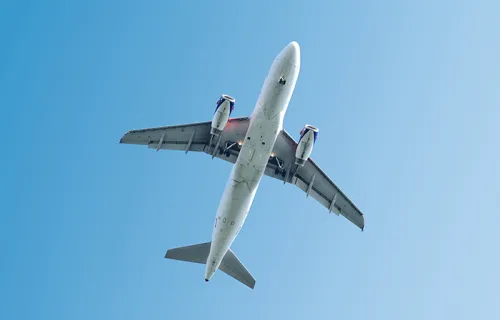
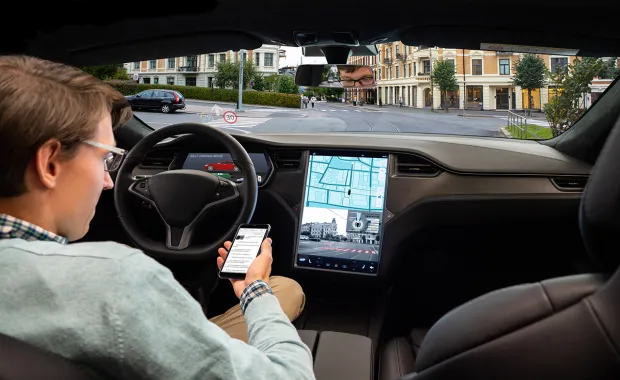
Uncrewed aircraft, autonomous vehicles and next-generation rail and transit technologies are expanding into networks that historically ran along fixed, well-worn paths—essentially the transportation equivalent of train tracks. This is already visible in dedicated corridors created for urban air mobility and drone delivery, automated truck platooning along interstate freight lanes, and dynamic lane management systems that let highways flex capacity based on real-time demand instead of fixed schedules. The next shift is unlocking the full capacity of road, rail and airspace networks rather than pushing more demand through the same limited corridors.
- 3. Infrastructure that manages itself
-
Cloud-native platforms paired with continuous AI monitoring are turning aging, checklist-maintained infrastructure into systems that can identify stress points before they fail—without taking systems offline for upgrades. Digital twins of bridges and transit systems that simulate stress in real time, embedded sensors on rail cars and highway structures that stream continuous condition data, and legacy air traffic and transit control systems migrated to modern cloud platforms with zero disruption are early proof points of what this looks like at scale.
The challenges these shifts create
Capacity and safety risk scale together. As more operators and technologies seek access to shared infrastructure, congestion, delays and safety risks rise in parallel. The path forward pairs AI-driven traffic and flow modeling with updated operating rules and data-sharing standards, so capacity increases do not outpace the guardrails meant to keep them safe. This is as much about policy and standards as technical advancement.
Legacy data is not ready for the AI trained on it. Most infrastructure data was never built for continuous, automated monitoring. It is fragmented, inconsistent or simply not collected at the intervals AI systems need. The right starting point is data architecture and integration before deploying predictive models, treating clean, structured, real-time data as a prerequisite for AI value, not a background chore.
Reliability has to be proven, not assumed. Deploying autonomous or AI-enabled systems into safety-critical environments requires more evidence than a successful demo. What builds real confidence is prototype-driven development—building and stress-testing solutions against real operational scenarios and benchmarks before they touch live operations—so reliability is demonstrated ahead of deployment, not discovered after.
Modernization cannot come at the cost of uptime. Migrating legacy systems to modern, cloud-native platforms carries real risks if rushed. Phased, CI/CD-backed migrations engineered for zero operational disruption make this achievable, and they have already been proven on national-scale, decades-old systems now running on modern, continuously updated platforms.
More connectivity means more exposure. As transportation systems become more networked and AI-enabled, they also become more appealing targets for cyberattacks. Cybersecurity must be built into the architecture from the start, with secure-by-design engineering, continuous testing for functionality and security, and compliance aligned to the highest applicable federal standards—not retrofitted after deployment.
People still make the call. No amount of automation replaces human judgment in safety-critical decisions. AI and automation should extend human oversight by handling routine and repeatable tasks, allowing experienced personnel to focus where their expertise matters most. Change management and training must bring the workforce along as partners in modernization, not bystanders to it.
The technologies driving this next chapter of transportation are increasingly proven. What separates a successful rollout from a stalled one is whether the more difficult work—data readiness, validated safety, secure architecture and a workforce prepared to operate alongside these tools—happens alongside modernization, not after. That is the conversation worth having with industry now, before the next wave of innovation arrives faster than the readiness to support it.
About this author

Dr. John Zehnpfennig, PE
Director
Dr. John Zehnpfennig serves as a director at CGI Federal, where his work spans transportation, AI, automation, cyberspace, information operations and critical infrastructure. He supports the Federal Aviation Administration's ongoing modernization of its Notice to Airmen (NOTAM) capabilities, serving as Chief Information Security Officer and ...