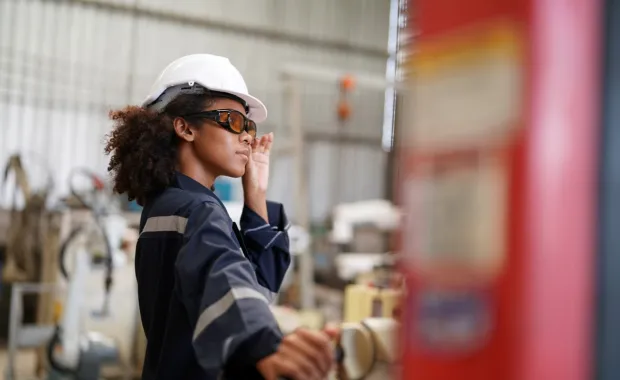
Manufacturing plays a critical role in the global economy, driving growth, supporting employment and enabling the production of essential goods across industries.
To maintain their competitive edge and adapt to modern-day challenges, manufacturers must prioritize adaptability and operational resiliency.
What does operational resilience look like in manufacturing?
In the manufacturing industry, operational resilience refers to the company’s ability to adapt quickly to disruptions while continuing to provide goods and services. This can be achieved in various ways, often as a combination of proactive planning, appropriate technological integration, diversifying supply chains and an evolved company culture.
Manufacturing industry trends:
- Digitization: integrating advanced technologies and updating existing databases to let organizations manage and maintain equipment, facilitate communication, optimize processes, reduce costs and improve overall quality
- Artificial intelligence: implementing AI into manufacturing algorithms helps process and analyze vast amounts of data and identify patterns in real-time
- Automation and robotics: tasking robots and automated software with repetitive or dangerous steps in the manufacturing process, increasing worker safety and reducing errors
- Sustainable initiatives: introducing environmentally conscious measures to mitigate the impacts traditional manufacturing has on the climate
- Servitization: moving away from selling products and towards providing services to stand out among competitors
- Reshoring: bringing manufacturing operations back to their original country from an overseas location to improve quality control and increase flexibility
How does resilience lead to growth in manufacturing?
Above all else, introducing operational resilience to manufacturers helps leadership navigate disruptions more effectively. Between labor challenges, inflation, transportation delays and geopolitical tensions, there are plenty of issues that have the potential to throw a business off course. If proper continuity plans are implemented, these disturbances can be mitigated or result in only minor disruptions.
Having tested resilience plans gives you an advantage over your competitors. When a hurricane disrupts the supply chain, you and your team will already have a step-by-step guide to keep operations moving with minimal disruption. This ability to adapt is essential.
Building a resilient manufacturing supply chain not only strengthens operational continuity but also creates opportunities for revenue growth. Increased agility supports more efficient use of resources, while disciplined innovation enables manufacturers to bring new products to market and scale their businesses.
Strategies used to build resilience in manufacturing:
- Analyzing data: Utilizing quality data-driven analytics can help you identify risks, optimize inventory and predict potential issues
- Investing in agile technologies: implementing modern technologies enables faster adaptation in the face of disruption and allows you to move away from outdated, rigid systems
- Diversifying supply chains: avoid relying too heavily on one supplier by using multiple sources and listing qualified backup suppliers to switch to during disruptions
- Building a change-focused culture: empowering employees to identify risks and embrace change encourages innovation and the understanding of what to do in a crisis
- Developing business continuity plans: creating and regularly testing plans that detail how to get operations running again as quickly as possible to avoid any long-lasting disruptions
Actionable steps to ensure resilience in manufacturing organizations
Depending on your desired outcome, there are multiple actionable steps to take in building resilience into your manufacturing organization:
Using AI in manufacturing
Artificial intelligence cannot be ignored in manufacturing technology—in fact, when leveraged effectively, it can be a key to growth. As manufacturing companies face aging infrastructure, growing labor skills gaps, compliance burdens and volatile supply chain issues, the need for more automated services grows. Artificial intelligence in manufacturing can increase productivity, reduce downtime and improve energy efficiency across the board.
For example, supply chains have historically had to tap into large volumes of disconnected data. This can create silos, errors and delays, preventing the accurate insights needed to compete in a dynamic and demanding market. But with manufacturing AI, critical insights can be quickly surfaced to increase responsiveness and communication between customers and employees.
Embracing digital transformation in manufacturing
Digital transformation is about more than introducing new technologies into your resilient manufacturing company—it’s about leveraging innovations to reshape your business model and deliver unbeatable value. Focusing on data-driven manufacturing helps align objectives with strategies and solutions to transform insights into actionable outcomes.
Consider conducting an IT audit to identify vulnerabilities and create a clear roadmap for integrating digital technology. Once a plan is in place, test it a few times to identify any gaps before progressing.
Strengthening supplier relationships in manufacturing
One way to optimize your supply chain is to build strong relationships with your suppliers. Working together to address potential challenges and conducting joint performance reviews ensures consistent quality and delivery. Declaring your business goals, sharing your organization’s desired performance metrics and setting clear expectations will help your suppliers feel more like partners.
Set up a portal to enable real-time data sharing and create a reliable method of communication between you and your most trusted suppliers. That way, you’ll be able to work them into your disruption prevention plans.
Implementing disaster recovery and business continuity plans in manufacturing
Creating curated disaster recovery plans (DRPs) and business continuity plans (BCPs) is crucial to minimizing disruption in manufacturing and the supply chain. As an industry, manufacturing is particularly vulnerable to extended downtime after an issue, given its frequent use of heavy machinery and time-sensitive processes. By having a plan in place, your team can mitigate financial losses, protect staff, preserve critical data and work to maintain a resilient manufacturing company overall.
Take the actionable step to setting up an alternative production facility reserved for emergency scenarios. That way, operations can continue during natural disasters or equipment failure, minimizing financial loss and maintaining the ability to fulfill customer orders.
Trust CGI—we can help
Whether this is your first or fifth effort to secure operational resilience in your manufacturing company, we are here to help you. Contact our experts today to discuss the next steps.