
Part 3 of an “Uneventful by design” blog series
The first business day of the month is one of the busiest in federal IT. At the Department of Veterans Affairs, benefits payments go out. Pharmacy volume rises. Claims, eligibility checks and appointment systems all see heavier traffic, and every one of them depends on databases that have to answer quickly under load.
When those databases keep up with the demand, Veterans get their payments, their prescriptions and their answers on time. Satisfaction stays high, and nobody thinks about why.
That is exactly the point. The most reliable operations are the ones nobody has to think about.
Peak day, the hard way
In the eventful version, the database team learns about a capacity problem the same way everyone else does: Response times climb mid-morning on the busiest day of the month, queries slow down and applications may start timing out. The team adds storage and compute in a rush, during business hours, on the systems that can least afford a mistake.
The problem gets fixed. But a Veteran with a question waited on the phone for a long time, a clinician waited precious minutes for a screen to load and leadership spent the afternoon asking what happened.
Peak day, by design
In the uneventful version, the same demand growth was visible weeks earlier. Capacity trending showed the database approaching its threshold well ahead of the peak. The IT team scheduled, tested and completed expansion during a planned window. They also rehearsed failover the month before, so they knew exactly how the system would behave if a node went down.
On the first day of the month, response times hold steady. Payments go out. Prescriptions move. Satisfaction scores continue to exceed expectations.
Nobody noticed the database. That is what success looks like.
Legacy systems still carry the mission
Many of the databases behind VA's most important services aren't new. Oracle, SQL Server and custom-built databases that predate today's modernization programs still process the transactions Veterans depend on every day.
Running those systems well isn't the opposite of modernization. It is what makes modernization safe. A partner who can keep legacy platforms stable while new ones come online protects the mission through every step of the transition.
Proven at enterprise scale
Volkswagen Group faces the same balancing act. The automaker set a goal to replace hundreds of legacy systems with fewer, more powerful and scalable platforms by 2026. Until each replacement goes live, the systems it replaces still have to run the business.
CGI has managed critical application services for Volkswagen for more than a decade. When the partnership expanded into a dedicated software delivery unit, the two organizations built knowledge retention into its design. Teams work on Volkswagen's systems long-term, so they develop a deep understanding of its core processes. That is the federal lesson in one sentence: Institutional knowledge is not a mere nice-to-have. It is a reliability control, and it should be designed in, not left to chance.
The principles at work
Uneventful operations are not the result of a single technology or a last-minute intervention. They are built through disciplines refined across years of operating complex, mission-critical systems, including commercial platforms and custom government environments with decades of history.
Three principles are especially relevant here:
- Watch the trend, not just the alarm. An alarm tells you something is already wrong. A trend tells you what will go wrong, while there is still time to prevent it.
- Rehearse failure. Scheduled failover and recovery drills turn a potential crisis into a known, practiced procedure.
- Keep the people. Accurate forecasts depend on people who know the systems, their history and their seasonal patterns. Continuity and institutional knowledge are reliability controls.
Across very different technology environments, the pattern is remarkably consistent: the smoothest peak days are prepared for well before they arrive. Someone recognized the trend early, the response had already been practiced and experienced people knew what the data was signaling.
Three questions worth asking
Across complex operational environments, the warning signs of future disruption tend to be visible long before the disruption itself. The organizations that consistently avoid surprises are the ones that ask the right questions early enough to act on the answers.
Three questions are particularly useful for assessing whether database operations are staying ahead of demand or simply waiting to react to it:
- How much capacity headroom do our critical databases have before the next peak, and how do we know? This shows whether you're forecasting or guessing. A confident answer backed by trend data means expansion can happen on a planned schedule instead of in the middle of a busy day.
- When did we last test failover under realistic load? This tells you whether recovery is proven. A failover that has only been tested at quiet times may behave very differently when it matters most.
- Who holds the institutional knowledge about our most important systems, and how are we retaining it? This reveals a risk that rarely shows up on a dashboard. Seasonal patterns, past incidents and undocumented dependencies often live with a few experienced people, and losing them weakens every forecast.
Together, the answers show whether Veteran satisfaction rests on a repeatable operating model or on a team's ability to react under pressure.
Uneventful by design
Veteran satisfaction is the visible result. Forecasting, rehearsal and experienced people are the invisible cause. CGI has spent more than a decade proving that model in one of the world's largest commercial enterprises and brings it to the federal systems Veterans count on. When reliability goes unnoticed, the mission is working the way it should.
About this author
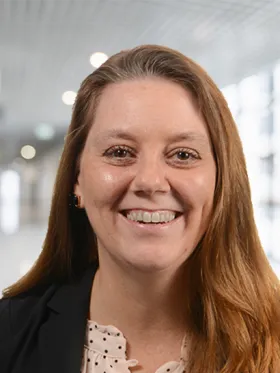
Monica Winthrop
Senior Vice-President
Monica Winthrop is responsible for the overall strategy, execution and delivery of large-scale IT, business and technology consulting services and solution in support of our veterans.