Across the federal landscape, agencies are navigating rapid policy changes, rising mission demands and ongoing workforce constraints while modernizing systems that keep government running. In the middle of all this change, a new capability is taking shape: autonomous AI. Autonomous AI is the next step beyond today’s generative and assistive tools. Instead of simply answering questions or drafting content, autonomous AI can analyze information, interpret rules, recommend next steps and prepare transactions that not only follow policy, but logic. It doesn’t execute the final action and leaves humans in control, but it can handle the heavy preparatory work.
The federal enterprise stands at an important moment. Consolidation has created the infrastructure. AI has delivered assistance and insight. Now, autonomous AI is emerging as the next step, enabling systems to take intelligent preparatory actions while humans remain in control. With thoughtful governance and integration into modernized enterprise platforms, autonomous AI becomes a powerful force multiplier for federal missions.
Setting the stage for autonomous AI
Federal modernization is accelerating through two major shifts that are laying the groundwork for autonomous AI: the consolidation of systems and the expansion of shared services. Agencies are actively modernizing core platforms, supported by government-wide initiatives such as HR 2.0, focused on transforming federal human capital management, and GO.gov, which streamlines travel services. These efforts give agencies access to centralized human resources services, travel and administrative capabilities. Additionally, under the executive order Protecting America's Bank Account Against Fraud, Waste, and Abuse, CFO Act agencies are required to consolidate their platforms and transition to a Financial Management QSMO–approved modern financial system “as soon as practicable.”
This modernization provides a modern digital foundation that supports advanced automation and AI. With shared systems, agencies can build once and reuse often, reduce duplicative investments and improve compliance through standardized processes and centrally updated logic.
Examples across government highlight the value of this architecture. At the Department of the Treasury, the Central Accounting Reporting System (CARS) is a single source of truth for financial classification and reporting. In shared service environments, including federal financial management lines of business, consolidation has already improved data quality, reduced workload and strengthened audit readiness. These same characteristics make these environments well-suited for responsible and accelerated adoption of autonomous AI.
Why autonomous AI matters now for the federal workforce
Federal teams continue to be challenged with balancing rising mission demands with limited staffing. Autonomous AI provides practical relief by helping organizations:
- Reduce manual, repetitive work
- Accelerate financial and procurement workflows
- Improve compliance through real-time monitoring
- Allow analysts to focus on mission outcomes
Current AI use cases such as invoice processing, payments, audit sampling, anomaly detection and financial reporting reconciliations have been proven to deliver clear mission value. Agencies are already piloting autonomous AI to draft cybersecurity incident categorizations, prepare travel voucher corrections, recommend grant drawdown adjustments, and perform reconciliation entries with humans reviewing before anything is finalized.
Autonomous AI in action
At CGI, we are committed to building responsible AI aligned with federal standards, strengthening accountability across our products and working closely with agencies to tailor AI to their missions.
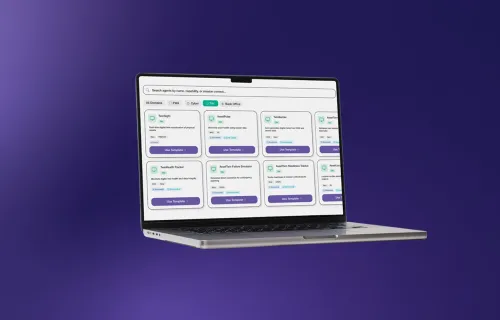
Within our Momentum solution, autonomous AI is already emerging as a responsible and effective capability in a federal system of record. We started with an AI-enabled assistant built on federal policy and online help. From there, Momentum was expanded to include generative features that interpret statements of work and draft contract line-item structures—tasks that typically require considerable analyst time.
Momentum answers natural language questions about financial data. Want to know which programs are using budget authority the fastest? Or where open obligations remain? Users can ask directly. Responses are permission-checked and drawn from authoritative data sources, giving teams secure, real-time insights.
Momentum enables autonomous agents to recommend actions, such as reconciling with Treasury CARS, identifying misclassifications or preparing reclassification transactions. These agents do not execute transactions themselves. Human review and approval remain essential [MH3.1]to ensure transparency, traceability and policy compliance.
Summary
As federal agencies continue modernizing their enterprises, autonomous AI is emerging as a practical and responsible next step in transforming how work gets done. With consolidated systems, standardized logic and human-centered oversight, autonomous AI can reduce manual workloads, strengthen compliance and deliver real-time insights that directly support mission outcomes. Early use cases such as financial reconciliation, classification, contracting support and cybersecurity preparation demonstrate how AI can responsibly amplify the federal workforce rather than replace it. With thoughtful governance and integration into platforms like CGI’s Momentum, autonomous AI is poised to become a powerful catalyst for efficiency, accuracy and mission success across government.
About this author

Kerry Canfield
Vice President
Kerry Canfield has more than two decades of experience in federal financial management as a consultant to federal clients across all three branches of government. As a vice president within CGI Federal, ...