The Department of the Treasury operates mission-critical systems that manage federal payments, tax administration, sanctions enforcement and global financial oversight. Because Treasury sits at the nexus of domestic and international financial flows, it remains a primary target for sophisticated nation-state adversaries and transnational cybercriminals. To defend this critical infrastructure, Treasury should shift from legacy, decentralized security models to a unified, cryptographically defensible active defense fabric. By integrating real-time enterprise monitoring with rapid, cloud-native forensics, Treasury can compress incident response times and ensure operational continuity, resilience, regulatory assurance and protection of global financial stability.
The strategic challenge: Fragmented visibility and legacy silos
Treasury’s cybersecurity responsibilities span multiple bureaus, each historically managing its own systems, telemetry pipelines and investigative processes. This decentralization limits the department’s ability to detect, correlate and neutralize coordinated campaigns across high value assets.
The historical consequences of fragmented telemetry surfaced during the SolarWinds compromise, when adversaries maintained undetected access to Treasury email systems for months. The incident underscored three critical requirements:
- Centralized investigative visibility through unified telemetry ingestion across all bureaus to eliminate blind spots.
- Uniform evidence handling with standardized, tamper evident forensic workflows to ensure chain of custody.
- Rapid, defensible forensics to quickly define incident boundaries and preserve evidentiary integrity.
Without these capabilities, Treasury faces prolonged exposure, operational downtime and significant reputational risk during future cyber incidents.
Modernizing beyond compliance
Treasury must address vulnerabilities and meet evolving federal mandates. Rather than treating these requirements as checklists, the department should use them as catalysts for architectural modernization. Treasury can achieve meaningful modernization by implementing:
- Active telemetry and forensic readiness under OMB M 26 14. This mandate replaces passive retention models and requires Treasury to demonstrate real time telemetry use, cryptographic log integrity and rapid forensic query capabilities across all high value assets.
- Zero trust and modern networking aligned with TIC 3.0, shifting security from a legacy “castle and moat” perimeter to a model that secures individual users, devices and data. Treasury employees’ identities are continuously verified and their activity securely monitored, no matter where they work or which cloud system they access.
- Postquantum cryptography planning that establishes a structured roadmap to transition Treasury’s digital estate to quantum safe standards. This includes automated cryptographic discovery to inventory legacy protocols and ensure cryptographic agility so encryption layers can be updated without disrupting operations.
Quantitative risk reduction framework
To evaluate the value of security modernization, enterprise cyber risk can be viewed as the intersection of threat likelihood, system vulnerability and operational impact. Because threat vectors are driven by external adversaries and largely outside Treasury’s control, the department’s primary leverage lies in reducing vulnerability and limiting breach impact.
Impact is ultimately a function of operational velocity — specifically, the speed of detection and response. Integrating enterprise monitoring with automated forensics compresses the investigative lifecycle, from telemetry ingestion and automated triage to deep forensic analysis. Replacing legacy, siloed bureau processes with a unified, cloud‑native forensic pipeline reduces this timeline from weeks to hours. This compression deprives adversaries of the dwell time needed for lateral movement, neutralizing a breach before it can escalate into a systemic financial crisis.
CGI Federal’s solution: A unified security fabric
CGI Federal addresses Treasury’s operational challenges by integrating digital forensics and enterprise monitoring into a scalable ecosystem designed for mission speed and evidentiary integrity.
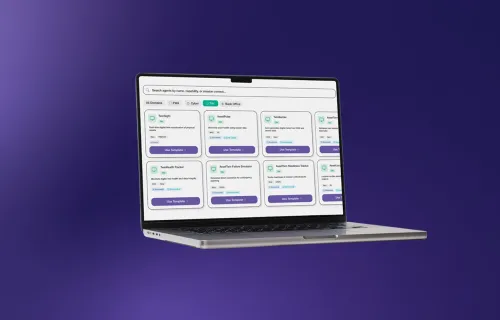
CGI Federal’s Tactical Forensics platform provides rapid digital evidence collection and analysis through a seamless field to cloud workflow hosted in AWS GovCloud. It combines encrypted evidence ingestion, cryptographically attested chain of custody processes and ISO/IEC 17025 accredited forensic analysis.
- Rapid triage: Block level contraband filters detect illicit or harmful content within minutes, including across deleted files, accelerating investigations.
- Tamper evident handling: Fully encrypted evidence workflows ensure legal defensibility and consistent chain of custody across bureaus, preventing log poisoning.
- Privacy preserving forensics: Built in zero trust data access controls ensure investigations respect civil liberties and protect sensitive financial data, aligning with high ethical standards for security operations.
CGI Federal’s Enterprise Monitoring and Security Operations oversees about 40 federal financial systems, making it one of the largest providers of federal financial cybersecurity operations. This experience positions CGI Federal to support Treasury’s need for centrally visible, multicloud, high‑velocity analytics.
- Unified telemetry ingestion that correlates data across diverse multicloud environments and eliminates blind spots.
- Workforce optimization through automated triage and high‑fidelity alerting, reducing alert fatigue for SOC analysts and allowing Tier 1 staff to focus on high‑priority threats.
- Architectural alignment that supports TIC 3.0, OMB M‑26‑14 and PQC migration planning.
Strategic alignment: Challenges and solutions
| Treasury priority challenge | CGI Federal strategic solution | Operational impact |
| Bureau-level fragmentation: Siloed, manual investigative workflows across bureaus. | Unified field-to-cloud forensics: Standardized triage, secure transfer and accredited cloud analysis. | Eliminates operational silos; reduces forensic processing time from weeks to hours. |
| High-value asset protection: Need for rapid detection and resilient incident response. | Proven enterprise monitoring: Scalable SOC models currently defending dozens of federal financial systems. | Compresses detection windows and prevents lateral adversary movement across high value systems. |
| Regulatory compliance: Pressures around OMB M-26-14, Zero Trust and PQC. | Modernized architecture patterns: Built-in active telemetry utilization, cryptographically signed logging, and cryptographic agility. | Achieves full compliance while strengthening the department’s active defense posture. |
| Evidentiary defensibility: Lessons from SolarWinds regarding incident scoping. | Cryptographically attested workflows: Tamper evident, centrally managed forensic evidence chains. | Provides the CISO with legally defensible boundaries and clear reporting for Congress and the Board. |
Conclusion
Treasury’s cybersecurity modernization is an operational and national security imperative. As threat actors grow more sophisticated, legacy and siloed structures create unacceptable risk to global financial stability. CGI Federal’s integrated forensic and monitoring solutions offer Treasury a unified, scalable and defensible approach to strengthen its defenses, accelerate incident response and ensure enterprise resilience.