Harnessing the power of digital transformation requires a strategic approach that goes beyond simply adopting new IT.
When designed effectively, a digital backbone becomes the cornerstone of a successful modern organisation. It facilitates all your processes and functions, making them more efficient, effective, and scalable to thrive in our ever-evolving world.
That’s because a digital backbone starts by aligning your strategy and organisational imperatives, then purposefully applying technology throughout your enterprise. This value-led approach to digitalisation creates an agile operating model that supports your desired outcomes:
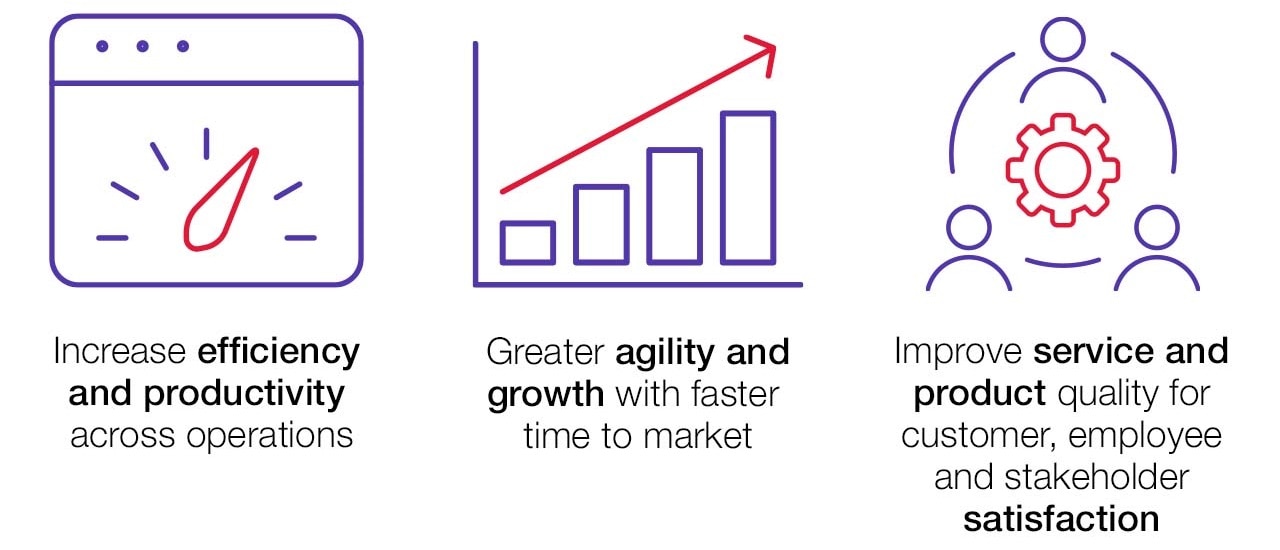
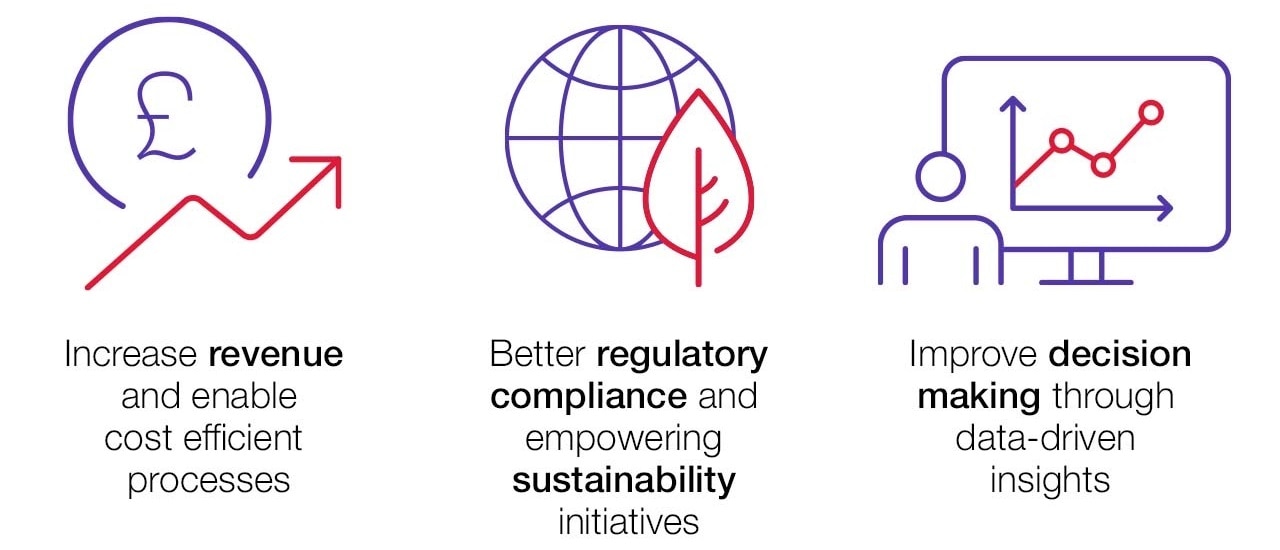
Developing a digital backbone is therefore essential to navigate the complexities of digitalisation, helping you unlock new opportunities and create an IT-enabled foundation for your organisation’s continuous growth. That’s why we developed the Digital Backbone, our end-to-end framework that makes IT the enabler of your success.
The Digital Backbone
Our proven, end-to-end approach for digital transformation success
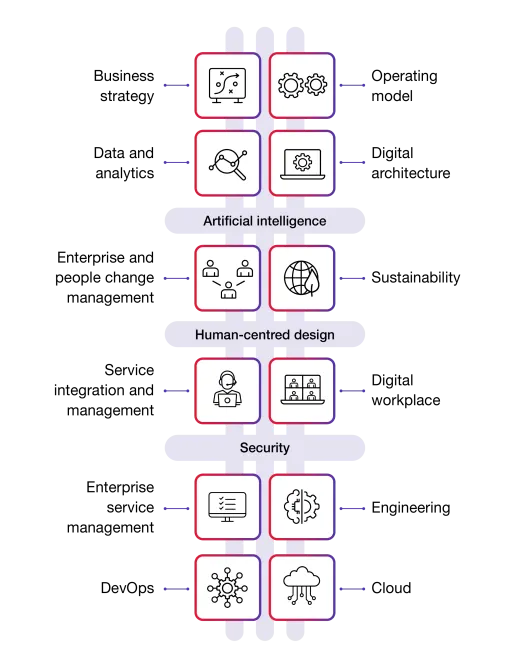
The Digital Backbone delivers best practices and lessons learned, inspiring your digital journey with twelve fundamental “building blocks” – the key capabilities – for transformation success. These are strengthened by three "enablers" that are essential drivers of any transformation initiative, helping to accelerate and enhance delivery every step along the way.
Business-led and technology-enabled, the Digital Backbone makes your organisational goals the primary drivers of your strategy, with technology serving to achieve these objectives.
The twelve propositions can therefore be implemented individually to address specific needs and ambitions, or combined into a comprehensive change programme – so no matter where you are on your transformation journey, you have a clear vision for success.
When combined, the core propositions and embedded enablers create a robust, IT-enabled structure that transforms everything you do. With secure and sustainable strategies in place, technology will become the driving force behind your organisation’s overall success, empowering you to overcome challenges, achieve business goals and thrive in an ever-evolving world.
- Business strategy
-
Develop a clear and aligned digital strategy that leverages technology to achieve your organisational goals.
- Operating model
-
Design an operating model that supports digital transformation, including restructuring processes, roles and responsibilities.
- Data and analytics
-
Implement advanced analytics capabilities using data-driven insights to inform decisions and drive continuous improvement.
- Digital architecture
-
Create a robust digital capability that supports your strategic initiatives, selecting the right platforms, tools and technologies.
- Enterprise and people change management
-
Empower your people to navigate change with confidence, translating transformation ambition into measurable value.
- Sustainability
-
Integrate sustainable practices into your digital transformation efforts to reduce environmental impact and promote responsible technology use. Learn more
- Service integration and management (SIAM)
-
Ensure seamless integration of your various in-house and external systems, enabling service quality and efficiencies.
- Digital workplace
-
Enhance service quality and customer and citizen experiences, fostering organisational growth with employee-focused digital transformation.
- Enterprise service management
-
Develop a comprehensive approach to efficiently manage enterprise services, aligned to your organisational goals.
- Engineering
-
Translate your transformation strategy from ideas into tangible outcomes with a robust engineering capability, enabling faster, more reliable, and scalable delivery of change.
- DevOps
-
Streamline software deployment by fostering collaboration between development and operations teams, accelerating delivery and quality.
- Cloud
-
Use cloud technologies to enhance scalability, flexibility, and cost efficiencies in line with your digital transformation objectives and business needs.
The three embedded enablers of transformation
While the Digital Backbone’s twelve core propositions are the “building blocks” to evolve your digital backbone, the three enablers sit at the centre – embedded throughout every capability as essential drivers of any transformation programme.
The propositions define the key capabilities for enterprise transformation, and these enablers strengthen delivery across the framework. They improve effectiveness and accelerate outcomes, whether you are adopting a single capability, or building and enhancing your full, end-to-end digital backbone.

Artificial intelligence
Artificial intelligence is a transformative capability that enhances how organisations deliver value across the Digital Backbone. Embedded within every proposition, it improves decision making, increases efficiency and enables your organisation to operate and innovate at greater scale.
A human-centred AI approach also helps create more intuitive, effective experiences that enhance how people interact with your organisation.

Human-centred design
This is transformation grounded in real user needs and organisational context. Human-centred design drives adoption, improves experience and helps realise meaningful, lasting value from any form of change.
By shaping your decisions, strategy, processes and technology through evidence rather than assumptions, human-centred design reduces risk, avoids wasted transformation effort, and ensures your new solutions work for the people who use them – whether employees, customers, or citizens.

Security
Security underpins the Digital Backbone by ensuring transformation is trusted and sustainable. It strengthens cyber resilience, protects digital assets and enables your organisation to innovate with confidence across increasingly connected environments.
By embedding security throughout your transformation journey, you can better manage cyber risk and ensure secure access across modern digital services and supply chains, to maintain operational continuity. For organisations operating critical services, a modern sovereign approach provides greater visibility, control and resilience across your digital estate.