
Technology is currently moving faster than our ability to process it. Artificial intelligence is quickly becoming the foundation of how we work, learn, and decide. This shift is creating a world that increasingly rewards immediacy: instant answers, instant data, and instant solutions. In this environment, it is easy to assume that speed equals progress. But the more intelligent our systems become, the more human our core skills need to be.
The World Economic Forum’s Future of Jobs Report 2025 makes it clear that while AI and big data skills are on the rise, the top ten core skills remain deeply human, like analytical thinking, resilience, agility, creativity, emotional intelligence. This confirms that most people intuitively know that to truly create value in an AI-augmented world, we must reframe what value means. It isn’t just about efficiency or scale anymore, but the ability to move from data to insight and action. This is where ‘wholeness’ comes in play, humans and AI each doing what it does best.
Reimagining decision-making in the age of intelligent systems
AI can already do extraordinary things. It processes millions of data points, detects patterns invisible to us, and generates insights in seconds. But even as these intelligent systems advance, the responsibility for the decisions or which decisions to automate still rests with us. So, the most critical skill will not be knowing the answer (AI can generate those faster), it will be knowing which questions matter. Why does this matter? What assumptions are we making? Who will this impact? What risks do we not yet see? Machines can inform decisions, but they don’t contextualize them. They can narrow down choices, but they cannot carry the accountability of that choice. Humans and AI will need to co-lead, but while AI plays the role of the consultant, we retain the final responsibility and accountability.
Learning and sense-making in an information-abundant world
Today, information is abundant, but we often confuse knowledge with insight. Knowledge is accessible, but insight requires intention to understand context and derive meaning.
First, there is resistance or fear to adopting AI. Leaders are being asked to strengthen AI literacy, embrace new tools, and cultivate a growth mindset. But for many teams, this feels unfamiliar and even uncomfortable. To navigate this change, we must lead with transparency, not by having all the answers, but by enabling learning, experimentation, and helping teams reimagine their roles and purpose in an AI-powered world.
Second, teams are overwhelmed with information. Dashboards, updates, metrics, and reports are abundant, yet decision-making slows down because the picture never feels complete. In these moments, teams look to leaders for coherence and direction, not data. Our responsibility is to connect the dots and coach our teams on how to interpret patterns, challenge assumptions, and make sense of what they see.
And as intelligent systems grow more capable, their occasional errors and hallucinations remind us why human judgement matters. It is our ability to discern, contextualize, and lead with wisdom that keeps technology aligned with reality. This is why learning today cannot be linear. It must be continuous, iterative, and driven by curiosity. The teams that thrive will be the ones that can connect ideas, stay curious, and remain confident in their judgement.
Identity and belonging in a digital workplace
While it is reassuring that sense-making is what will keep us relevant, leaders are and will continue to face a much more primal question from their workforce, ‘Will I be replaced?’.
As roles evolve and automation grows, leaders must help their teams understand that AI is a tool. Technology alone doesn’t transform organizations, people do.
Purpose, belonging, and identity then become the anchors of the future workplace. Today’s professionals care deeply about meaningful work, psychological safety, and a sense of community. They want to contribute to something larger than themselves, to be part of workplace cultures where trust, respect, empathy, and inclusion are everyday behaviours. Workplaces that invest in shaping that experience, build cultures that endure, adapt, will ultimately thrive.
Mentoring as the path to wholeness
As AI continues reshaping and redefining what is possible, the question is not “How do we keep up?” but “How do we stay whole?”. Wholeness means combining technological intelligence with human experience and judgement, balancing operational excellence with psychological safety, aligning actions with purpose, and making decisions that honour both data and ethics.
The future, I believe will require shared leadership between humans and intelligent systems—a partnership, not a competition. AI will amplify our capabilities, but only leaders can ensure that those capabilities are used ethically, responsibly, and meaningfully.
We must remember, organizational visions are still anchored in human values, not technological ones. The aspiration to ‘create an environment in which we enjoy working together and build a company we can be proud of,’ remains timeless because pride and purpose are human pursuits.
In a world shaped by intelligent systems, mentoring remains our most human act of leadership. It is how we transfer wisdom, build confidence, and ensure that progress is shared and not just accelerated.
I believe that in a world defined by rapid technological evolution, especially AI, leaders must remain continuous learners by embracing new tools, leveraging innovation, and using these advancements to drive growth and stay competitive. At the same time, the wholeness of human leadership becomes even more essential, because competencies like vision, courage, emotional intelligence, coaching, empathy, and accountability will only grow in importance as we shape the future together.
This blog was originally published in Alchemy by xMonks (Vol: 1, Issue 9; November 2025) and is republished with permission.
About this author
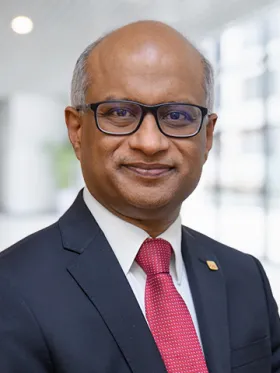
Rakesh Aerath
President, Asia Pacific Global Delivery Centers of Excellence
Rakesh Aerath is President of CGI’s Asia Pacific Global Delivery Centers of Excellence, leading a team of approximately 20,000 professionals and consultants across India, Malaysia and the Philippines. In this role, he partners with CGI’s client-facing business units to help clients accelerate their digital transformation ...